

A colleague recently asked me to lead a series of group classes for her students while she was away for a month. Her goal: keep them engaged with their piano pieces and hopefully practicing in her absence.
While I have a variety of activities and games I draw upon when working with my own students, it proved an interesting challenge to consider what to do with a group of students whom I’d never met. I wanted to come up with activities that would be enjoyable while also musically meaningful.
Here’s the structure and activities I landed on.
The Class Format
1. Ice Breaker
I opened each class with a simple, friendly ice breaker activity to help everyone relax and feel welcome.
One of my go-to ice breakers is to go around the room and ask each student to state their name and a favorite from a chosen theme, such as favorite color/animal/book/ice cream flavor.
But this time, I used a different ice breaker resource I’ve been working on for a couple of years and am finally putting the final touches on (stay tuned!).
The point of an ice breaker isn’t necessarily musical; it’s human. When kids feel at ease and recognized as young musicians, they are open to learning.
2. Performance Round
Each student played one or two pieces — polished or in-progress, no pressure either way. After each performance, I offered one or two observations. To keep everyone engaged, I occasionally turned back to the group to ask them to weigh in on what they heard or to help define symbols or terms we discussed in the performer’s score. For example:
- Can you tell us what symbol you see here? Who can tell us what it means?
- Does anyone know what “balance” or “Arietta” means?
- Did you hear a difference between the first and second time they played? Do you think there’s room for even more?
This kept the listeners engaged and turned individual feedback into a shared learning moment — building listening skills and score literacy along the way.
3. Rhythm Games
Next, we moved into chanting rhythm patterns back and forth, which naturally led into a round of my Trick-or-Treat game.
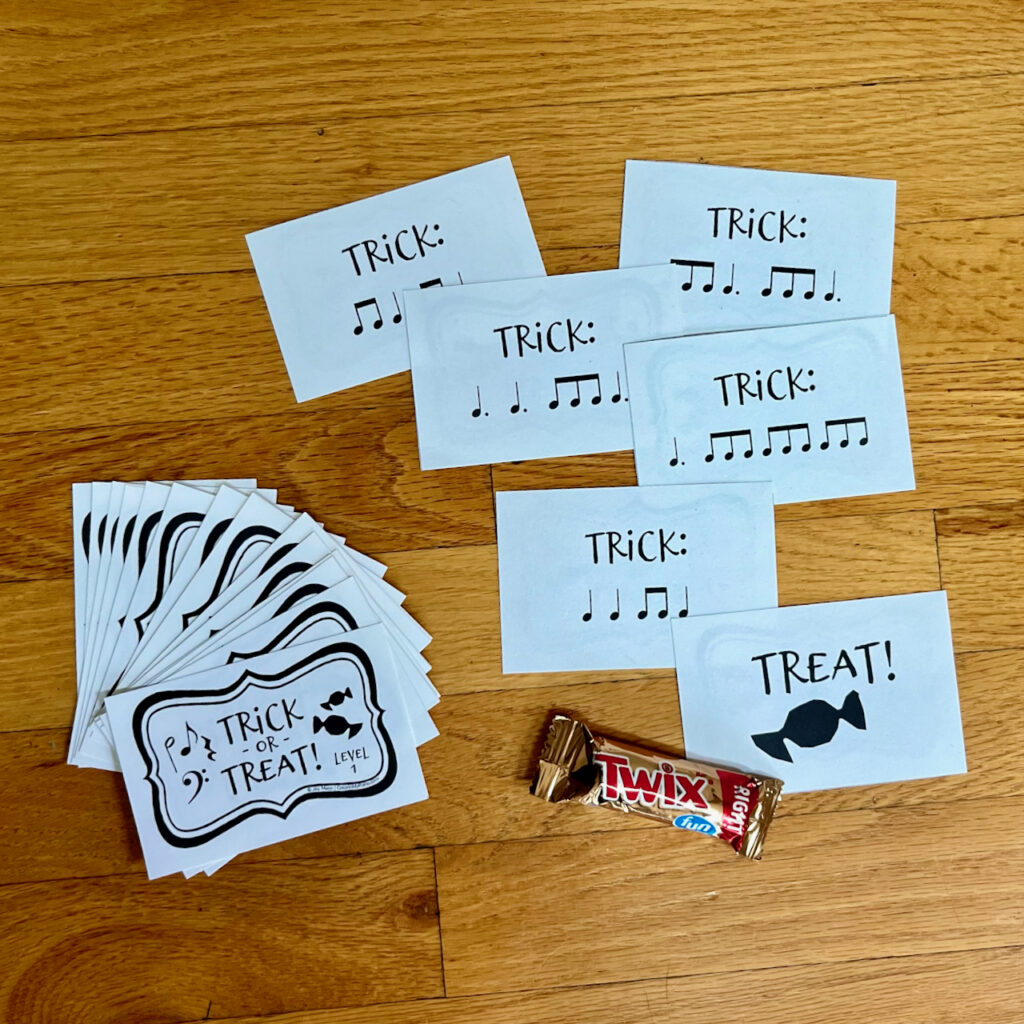
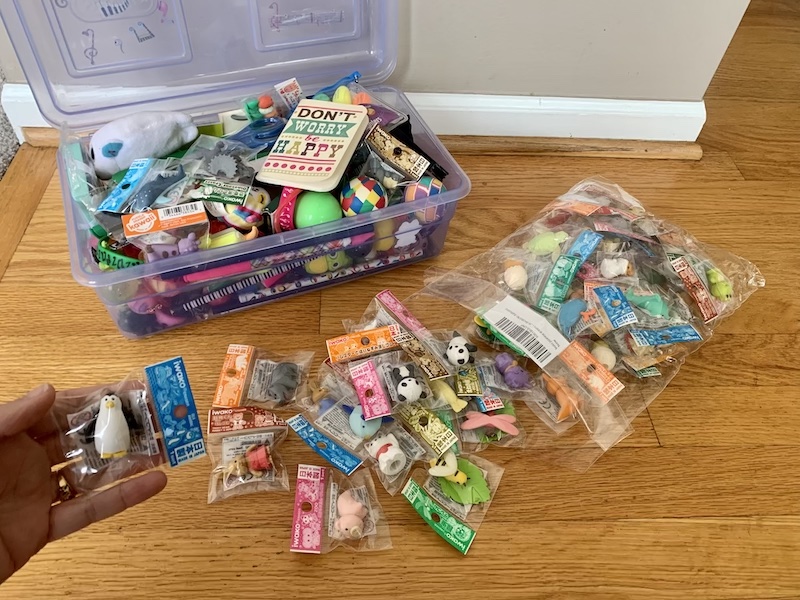
I brought my piano prize box along so every student could take home a small treat (instead of candy).
Both activities reinforce a sense of rhythm and ensemble awareness.
4. Hot and Cold — with a Musical Twist
With the youngest class, I closed with another game: one student (the “Searcher”) closed their eyes while another hid a plastic music note prop I once picked up at a thrift shop.
Here’s the twist: instead of calling out “hot” or “cold,” the group used mini maracas to guide the Searcher. Shaking the maracas more loudly and vigorously meant getting closer; quieter meant moving away. Working together, we created live crescendos and decrescendos — feeling and hearing the musical effect in real time. The kids had a blast; it’s one thing to see a dynamic marking on the page, but another thing entirely to feel it with your whole body.

Although we piano teachers don’t often find ourselves planning group classes for students we’ve never met, it’s perhaps a fun thought experiment. What would YOU reach for? The constraints might just spark inspiration or ideas you’d bring back to your own group classes.
What activities have you used with groups of students you hadn’t previously met? I’d love to hear in the comments.
