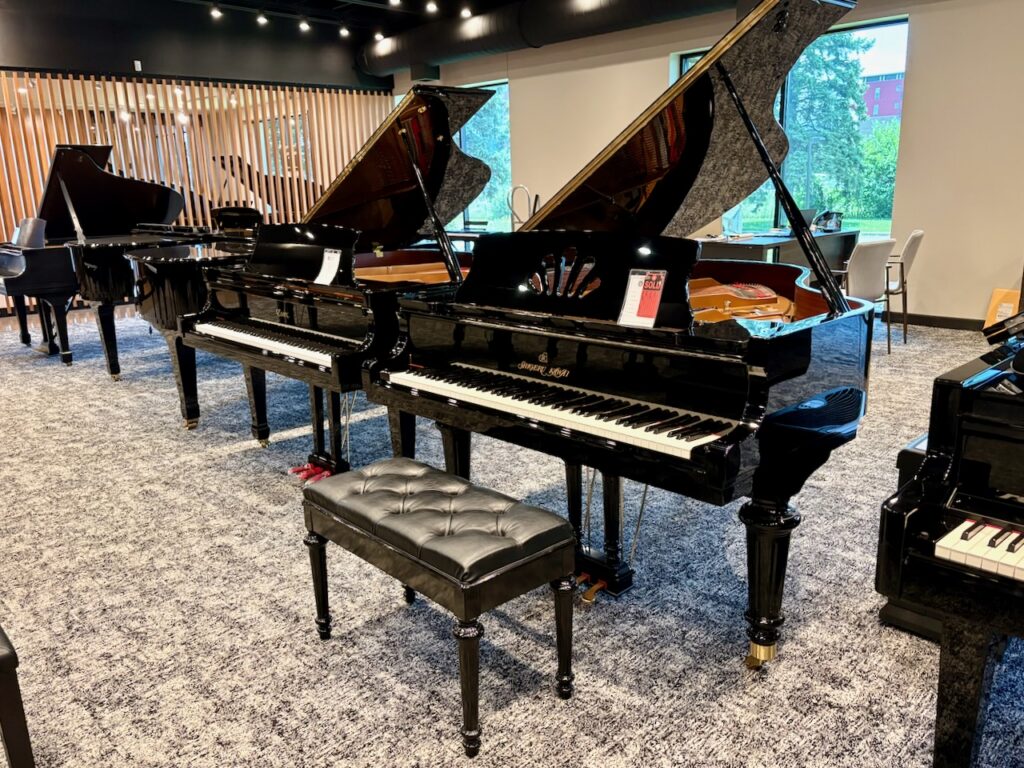
As you might recall, a few weeks ago I sold my grand piano with the plan to upgrade to something newer. In the interim, I’ve been depending on my digital pianos. I’ve really missed having an acoustic piano — even more than I thought I would!
I’m happy to say that my piano search is over and I’ve purchased a fantastic piano. Here’s the whole story!
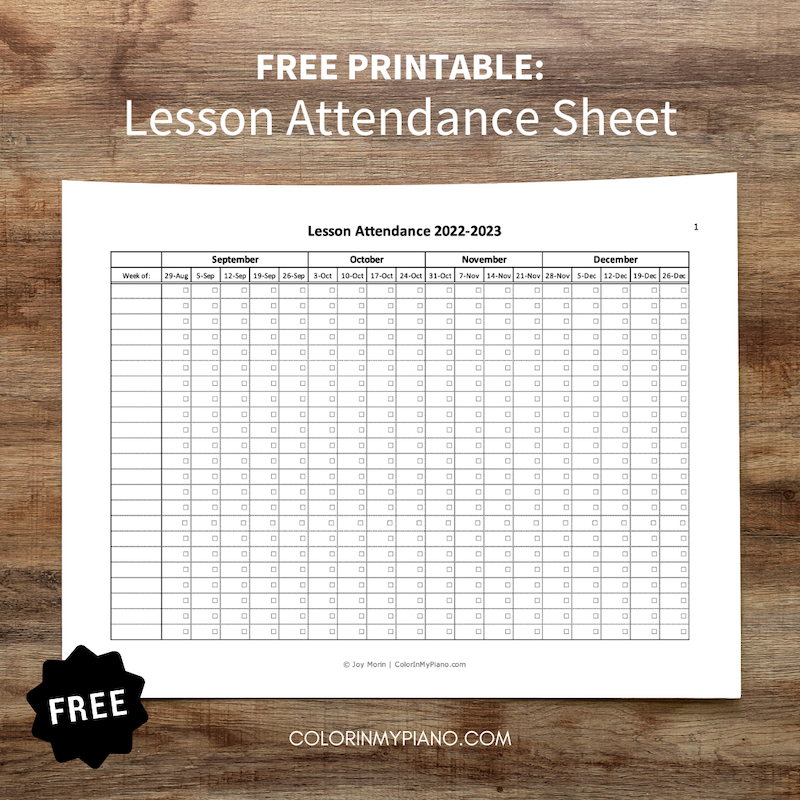
I’ve just finished updating one of the studio business forms from my Printables page for the 2025-26 school year: the Lesson Attendance & Payment Sheet PDF.
Last week, I offered a summer music camp for my piano students.
Despite how much I love running summer camps, it’s actually been a handful of years since I last offered one! The reason for the break was a combination of factors: relocating in December of 2019, the Covid-19 pandemic, and a few years of pregnancies and raising my daughters through the baby/toddler stages.
Now that my own two children are a little bit older and my studio is made up almost entirely of local Michigan students, I decided this was the year I wanted to get back to offering a summer camp.
I’ve been setting money aside for many years in hopes of someday upgrading my piano, and this year is finally the year. So, over the past few months, I’ve been visiting various piano stores to play lots of instruments and get a better sense of what’s out there.
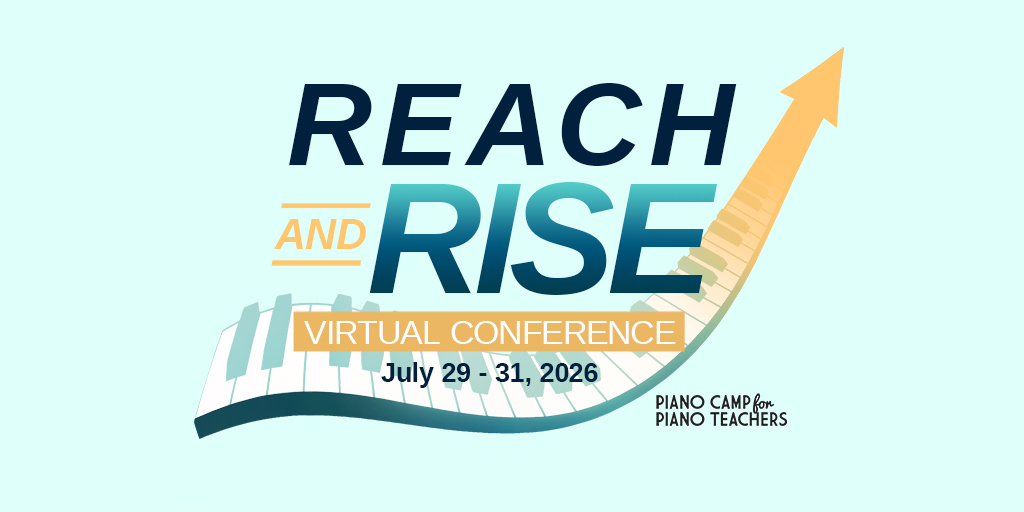
Just a quick invitation to consider joining me and my colleague-friend, Amy Chaplin, at the Reach and Rise Virtual Conference taking place July 29-31, 2026. Amy and I will be presenting a session on Thursday the 30th at 10am Central. Our session is titled: Notion: The Everything App You Didn’t Know You Needed.
If you’ve read my past blog posts about Notion and have been curious to learn more about how Amy and I both use Notion as music professionals, this might be the perfect opportunity! Plus, Elizabeth Gutierrez, the organizer of this conference, has a variety of great sessions and speakers lined up for this event, as you’ll see on the event schedule:
Dr. Scott McBride Smith
Phyllis Alpert Lehrer
Amy Chaplin
Joy Morin
Leila Viss
Mona Rejino
Catharine Lysinger
Topics covered include: reading, technique, musicality, artistry, expression, performing, parent communication, and studio management with tools like Notion and Canva. Replay recordings are provided in the event that you can’t watch all the sessions live.
Early bird pricing ends Monday, July 6. View the schedule and register now HERE. (Full disclosure: This is an affiliate link — thanks for supporting my work!)
At the end of the school year, we piano teachers often find ourselves saying goodbye to graduating seniors — students who may have spent years growing up in our studios.
In a recent email newsletter (P.S.: If you aren’t already on my email list, sign up here — I’ll send you blog post updates, along with a monthly newsletter with a personal note and other highlights), I shared about the final lessons I recently had with two students. I described a few things I did to make those last lessons feel special.
That email resonated with several readers, who wrote back to share what they have done for their own graduating students. I loved reading their ideas, and asked permission to pass a few of them along here.
Some of these ideas are simple, while others could become part of a recital or studio celebration. Either way, they give us a way to celebrate the time we’ve shared and mark the end of a student’s years in the studio.
Last week, I hosted my 2026 Retreat at Piano Manor — a three-day event for growth-minded piano teachers. I feel so grateful to have been able to organize, host, and lead this event for teachers! Here are some highlights from our time together, June 8-10, 2026.
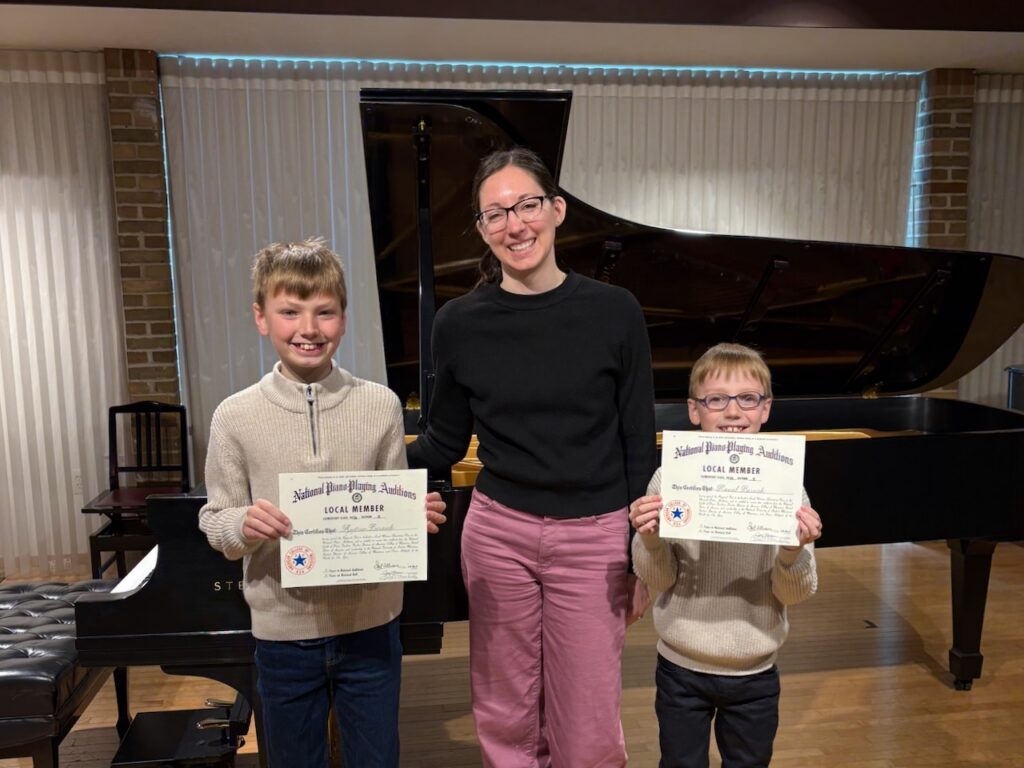
Earlier this month, eight of my students participated in auditions through the National Guild of Piano Teachers for the first time — and so did I, as their teacher. Despite more than twenty years of piano teaching, this was my first experience with Guild. After a few months of learning the syllabus, handling the admin work, and watching my students perform, I came away with a lot to share. I’m glad I took the plunge. In this article, I’ll share what I learned as well as what I see to be the pros and cons of the Guild program.
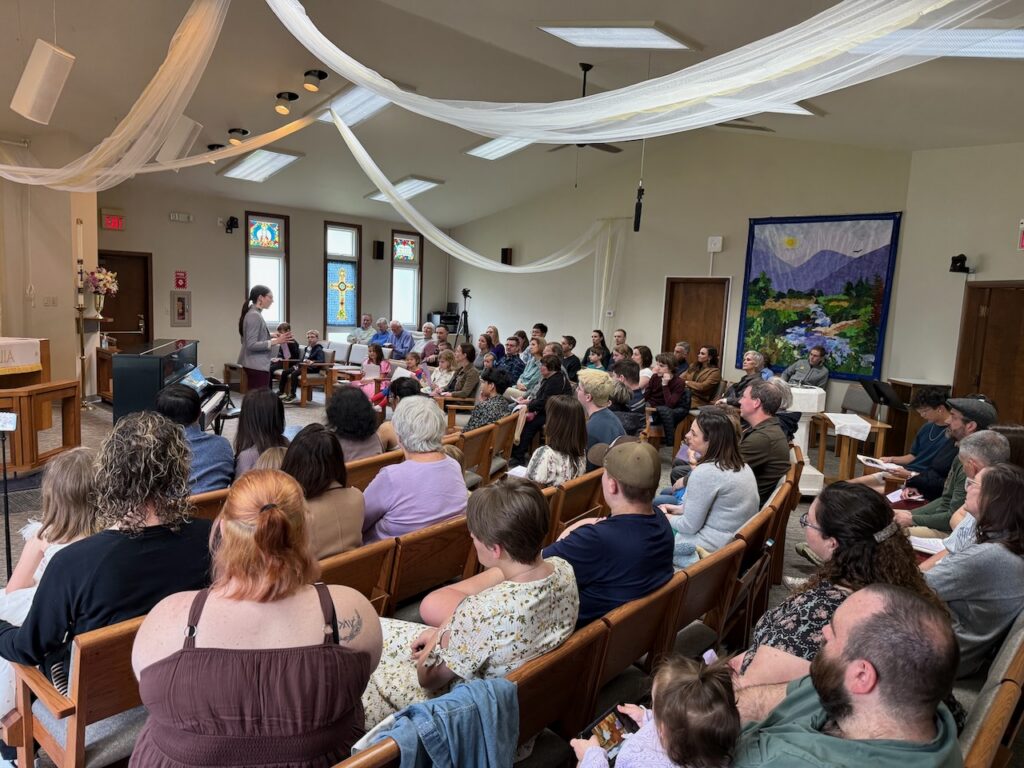
My spring studio recital took place a couple of weeks ago. Our recital venue was the church where I am employed as the church pianist and director of music. They have a lovely Yamaha DU1 that was purchased about a year ago.
I’m pleased to share that Alfred Music has published one of my latest compositions! I am honored to be among about 15 new composers Alfred recently recruited to add new pieces to their Signature Series Solos.
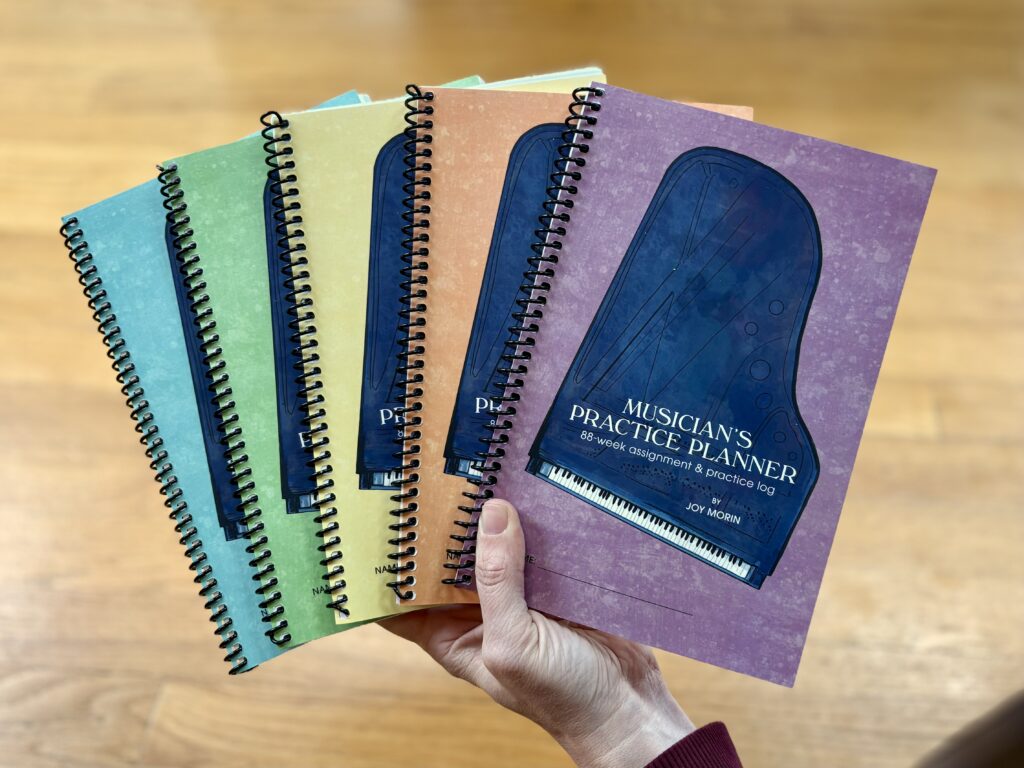
Exciting news – I’ve just added TWO new color options for the cover of my Musician’s Practice Planner. The new colors are orange and purple, making a total of five color options now available.
A teacher recently sent me a message: “It’s working wonders with my daughter!!!”
Coincidently, I can echo the exact same sentiment. Two months ago, I started using my Musician’s Practice Planner with my own 6-year-old daughter. She is really motivated by marking those checkmarks when we do our piano practice every morning before school.
Today, I thought I’d pass along information about a few professional development opportunities offered by the Gordon Institute for Music Learning (GIML) this summer. Taking my first Professional Development Levels Course (PDLC) through GIML back in 2016 was pivotal in setting me on a course to continue to studying music learning more deeply and applying Gordon’s work to my practice as a piano teacher. Since then, I’ve taken three other PDLCs. I highly recommend them.
Below are details about three offerings this summer (2026) of GIML’s Piano Level 1 PDLC.
Winston-Salem, North Carolina, USA Dates (in person): July 6-10 Dates (Online Theory): May 17- June 28
Regina, Saskatchewan, Canada Dates (in person): June 29-July 3 Dates (Online Theory): May 10-June 21
Kammermusiksaal Ehrenbreitstein (Koblenz, Germany) Dates (in person): July 20-July 24 Dates (Online Theory): May 17- June 28
For more complete details as well as information about GIML’s other 2026 PDLC offerings (choral, early childhood music, elementary general, etc.), click here. For more details about what is covered in GIML’s PDLC Piano Level 1, please visit GIML’s website here.
My tips:
If you’d like to know what attending a PDLC is like, check out my blog post links below. If you still have questions, feel free to get in touch and I’ve be happy to correspond with you.
I highly recommend applying for a Teacher Enrichment Grant through MTNA to help cover the expenses of attending a PDLC. I know quite a few teachers (including myself) who have successfully gotten funds to cover PDLCs or other professional development projects.
It is helpful if you can start reading Gordon’s Learning Sequences in Music book before you start the PDLC, so you won’t have to do all of the reading during the PDLC.