

The Great Composers & Their Music is a flexible music history curriculum designed for use with private piano students, general music students, or homeschoolers. I have used this curriculum for a weekly music classes for homeschoolers, monthly group classes with private piano students, and summer music camps. I chose “lapbooking” as the format for my curriculum because it is a visual, interactive way to learn historical facts and information. I have been very impressed with how much information my students are able to absorb each week through lapbooking.
Below is an chronological listing of the composers currently available in the Great Composers & Their Music curriculum series. To purchase one or more of the PDFs for creating these lapbooks with your own students, please visit this page of the Color In My Piano shop. Stay tuned – one or two new composers are added each year!
BAROQUE ERA
Bach, C.P.E
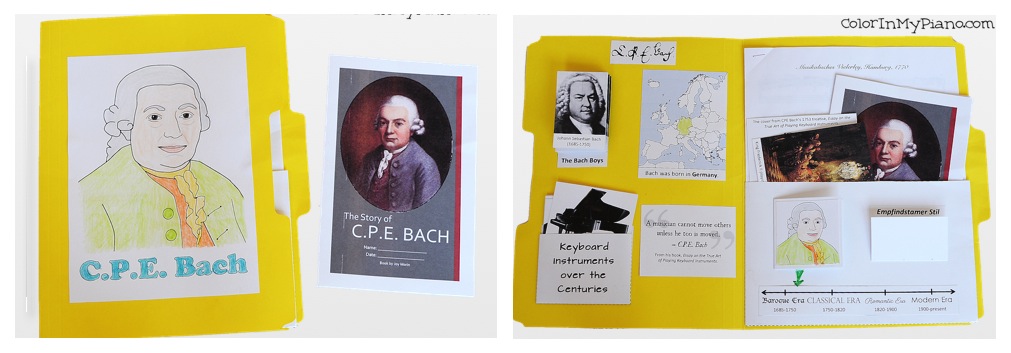
CPE Bach gave us the perfect opportunity to discuss the evolution of the piano, from the clavichord and harpsichord all the way to the modern piano. Another term we discussed was Empfindsamer stil — the “sensitive style,” which was a compositional style that was characterized by changing moods within a piece, in contrast to the single “affect” generally found in Baroque pieces before this time.
Bach, Johann Sebastian
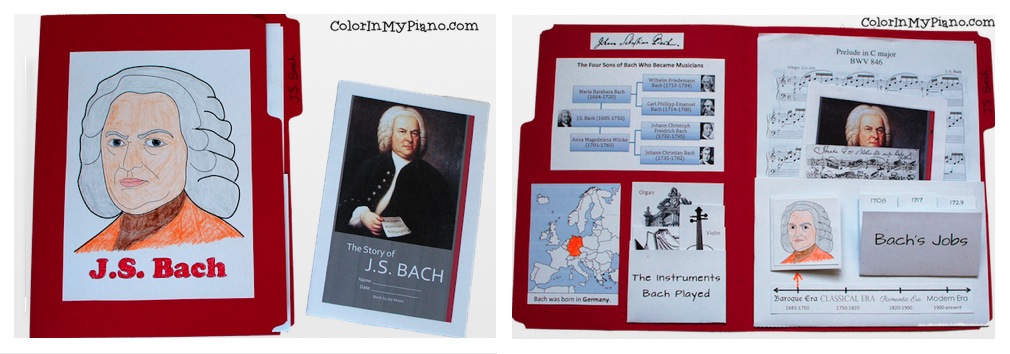
In this composer study, students will learn about J.S. Bach’s duties at the various jobs he held throughout his life. Some of the terms covered include: cantatas, Kapellmeister, Kantor, and the Well-Tempered Clavier.
Handel, George Frederic
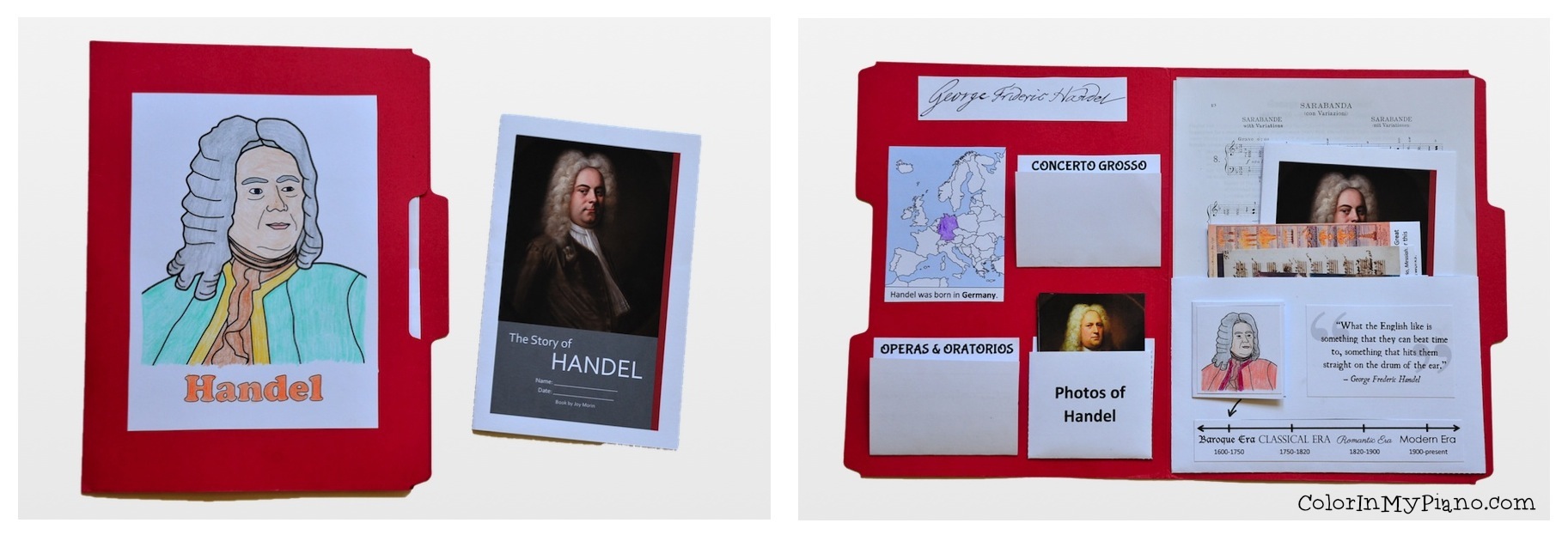
Studying Handel provides the opportunity to discuss popular Baroque forms such as the concerto grosso and the oratorio, and to learn the stories behind a couple of his famous works: Water Music and Music for the Royal Fireworks.
Scarlatti, Domenico
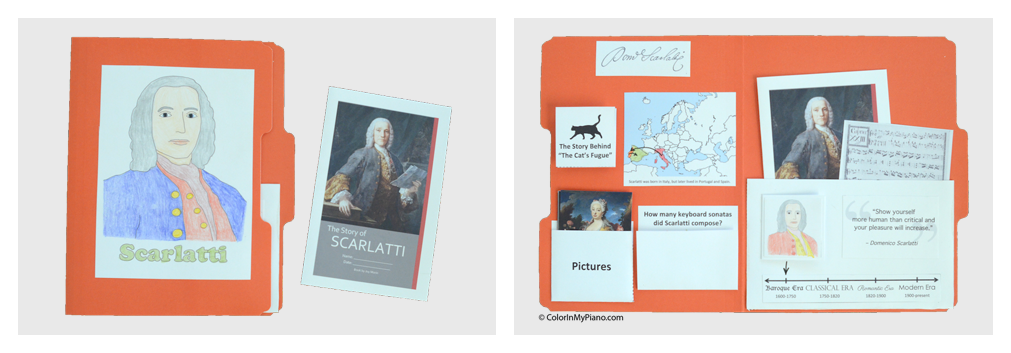
Scarlatti was a Baroque composer who greatly influenced the development of the Classical style, especially in keyboard music. He taught the princess Maria Barbara of Portugal and followed her to Spain when she married and became Queen of Spain. Scarlatti is remembered today mainly for his 555 keyboard sonatas.
Vivaldi, Antonio Lucio
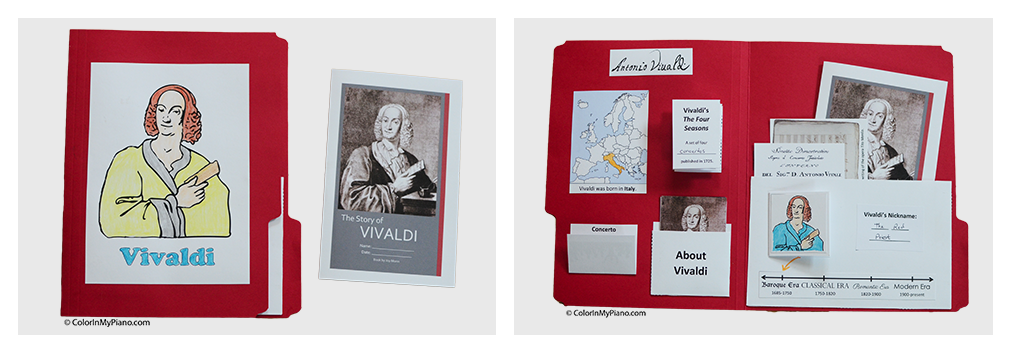
Students will enjoy learning about “The Red Priest” and his passion for composing and teaching music to the orphans and students at the Ospedale della Pietá in Venice. Special focus is given to Vivaldi’s most well-known work, The Four Seasons.
CLASSICAL ERA
Beethoven, Ludwig van
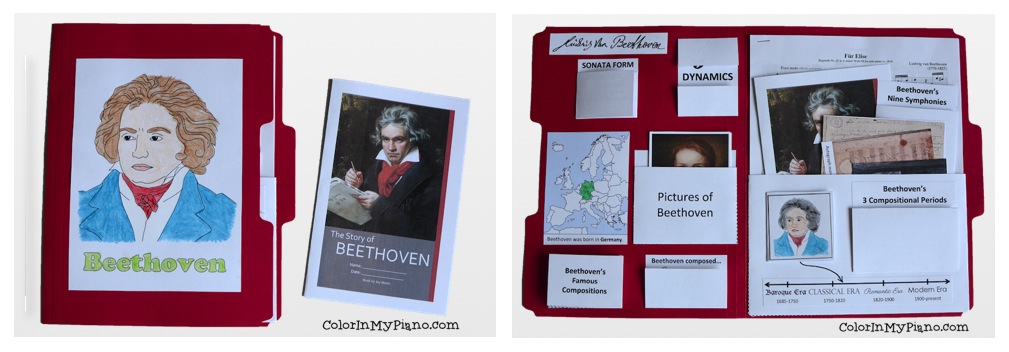
We listened to Beethoven’s most famous compositions so that we would be able to identify them by name upon hearing them. We also talked about sonata form and his three periods of compositional style.
Clementi, Muzio
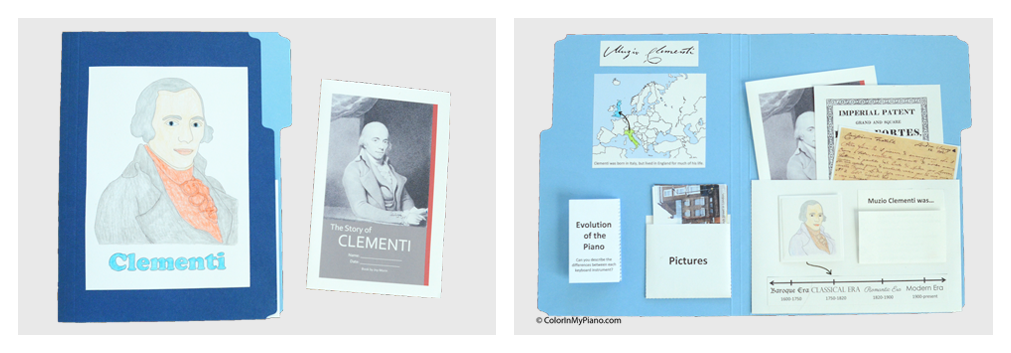
Muzio Clementi is remembered as a keyboardist, pedagogue, music publisher, and piano manufacturer. His compositions developed the techniques of the early piano to such an extent that he was called the “Father of the Piano.” Studying Clementi is the perfect opportunity to talk about the evolution of the piano from harpsichord, to fortepiano, to modern piano.
Haydn, Franz Joseph
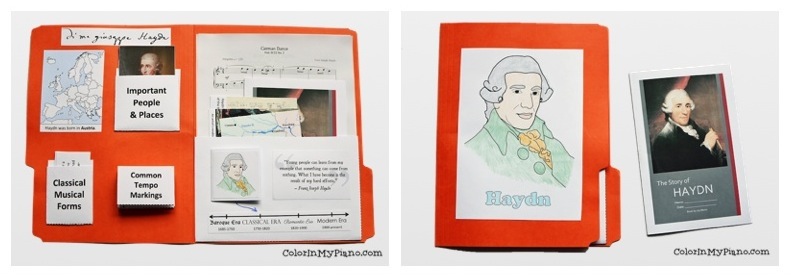
When studying Haydn, my homeschool students learned about the popular music forms of the Classical Era (sonata, symphony, string quartet, concerto) and discussed the various places Haydn was employed as Kapellmeister (the Esterhazy palace, in particular). My students loved hearing about Haydn’s poor and lowly childhood and how his hard work and determination enabled him to become a great composer.
Mozart, Wolfgang Amadeus
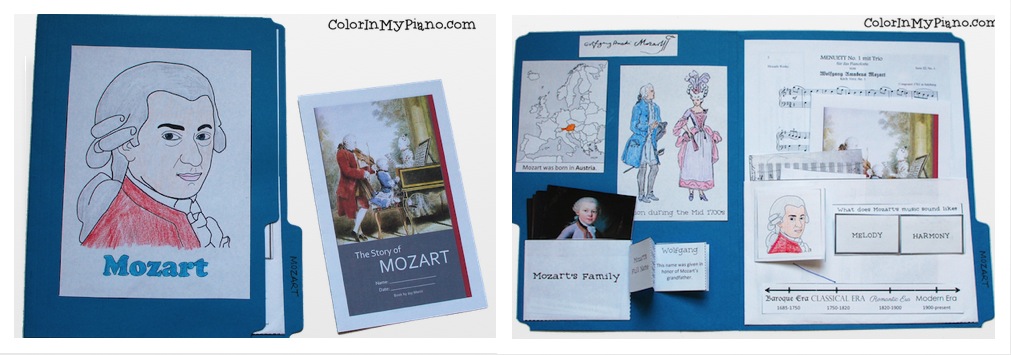
Students are always excited to learn more about Mozart! Terms that are covered: prodigy, Alberti bass, and melody versus harmony.
ROMANTIC ERA
Beach, Amy
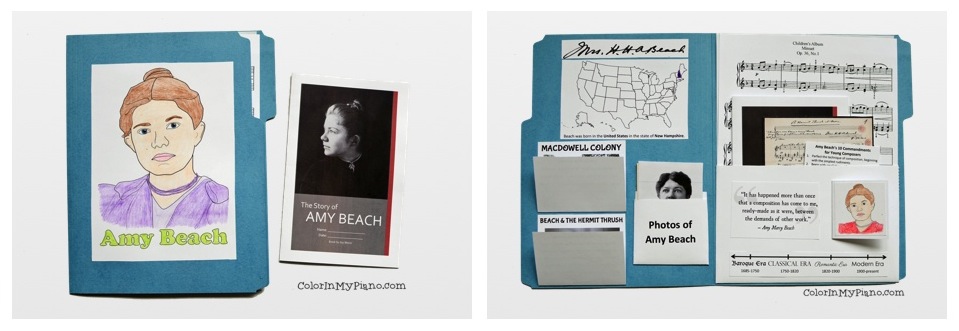
Studying Amy Beach gave us the opportunity to discuss the challenges of being a woman composer. We also learned about the MacDowell Colony and how Beach’s perfect pitch allowed her to write down bird calls in musical notation.
Brahms, Johannes
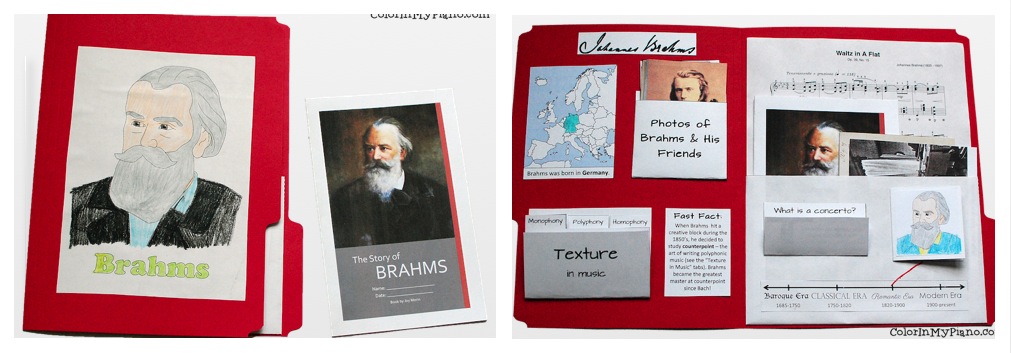
Studying Brahms gave us the opportunity to talk about concertos, and the difference between monophony, homophony, and polyphony. Since we had already studied Robert Schumann, we were able to connect the two composers and discuss the relationship dynamics between Brahms and the Schumann family.
Chopin, Frederic
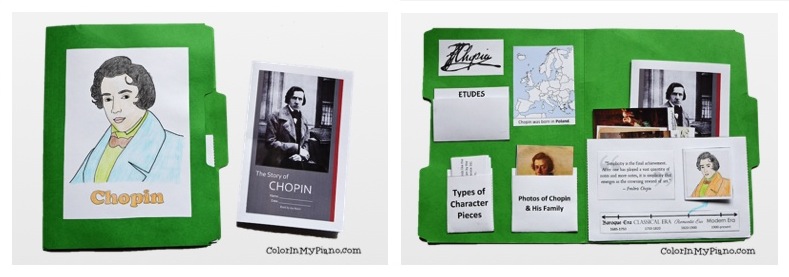
Studying Chopin was the perfect opportunity to discuss various types of character pieces and listen to a variety of Chopin’s wonderful oeuvre for piano. We also talked a bit about Chopin’s background as a Polish composer and his life in Paris, contributing as a musician during salon performances.
Holst, Gustav
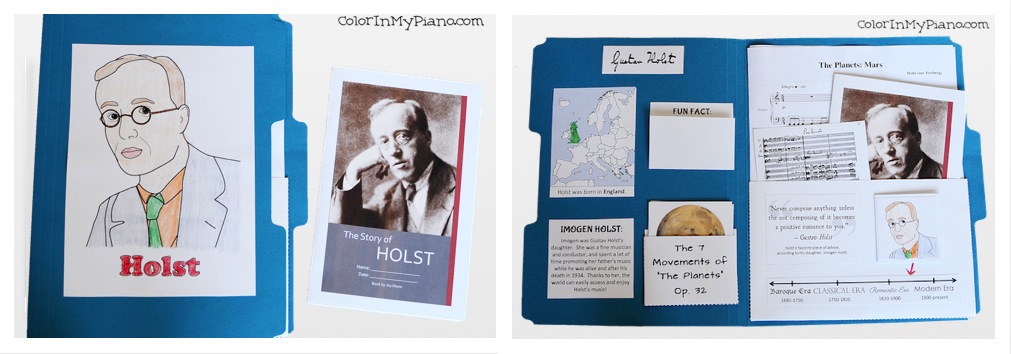
We spent a lot of time listening to Gustav Holst’s most famous work, “The Planets.” We drew a picture of each planet as we listened to each movement, and talked about how it turned out that Holst was correct not to compose a new movement for Pluto after it was initially discovered! We also learned that John Williams was influenced by “The Planets” when he was composing the music for the Star Wars movies.
Liszt, Franz
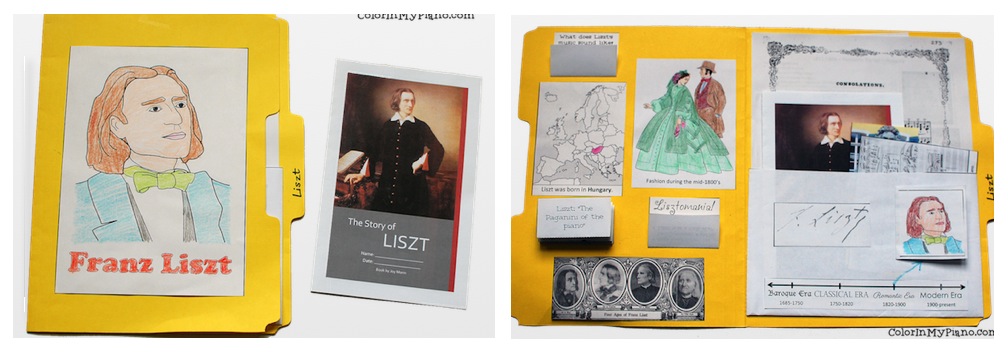
In this composer study, students will learn about Liszt’s popularity as a pianist as well as his generous spirit, particularly at the end of life. Student will enjoy learning about how Liszt managed to “save the day” to erect a monument of Beethoven in Bonn, Germany.
Mussorgsky, Modest
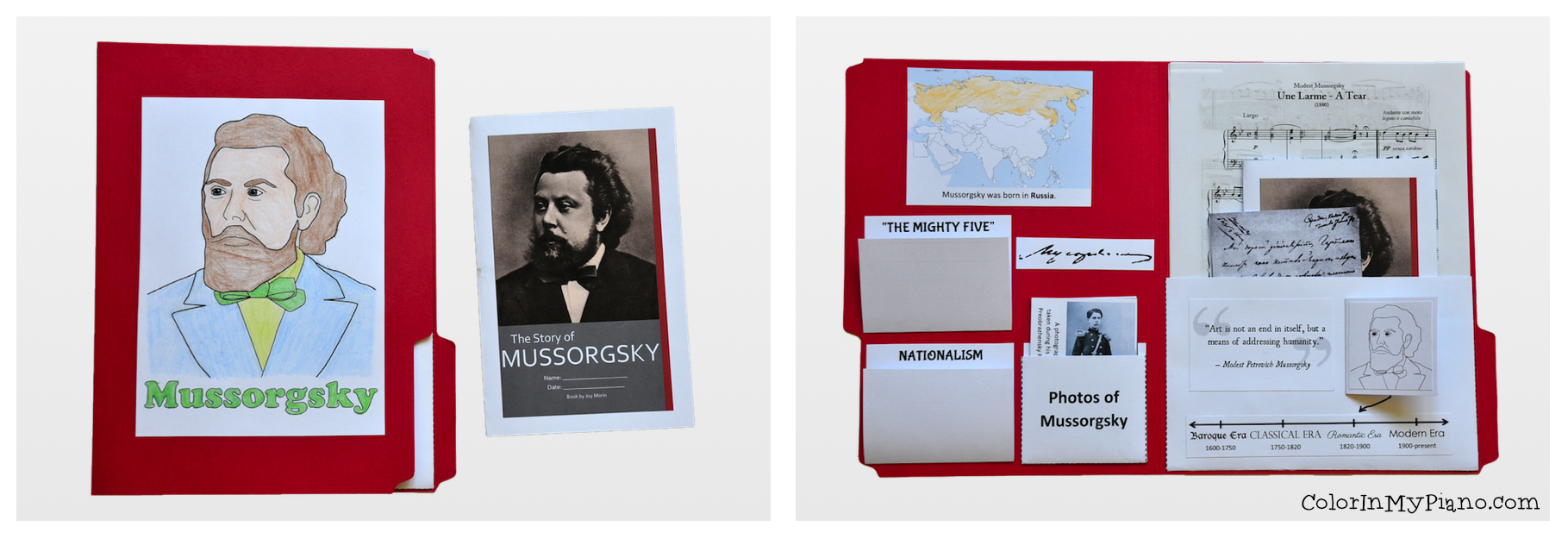
Studying Mussorgsky provided the opportunity to learn about the group of Russian composers known as “The Mighty Five” and their Nationalist tendencies. We also studied Mussorgsky’s well known work Pictures at an Exhibition.
Saint-Saens, Camille
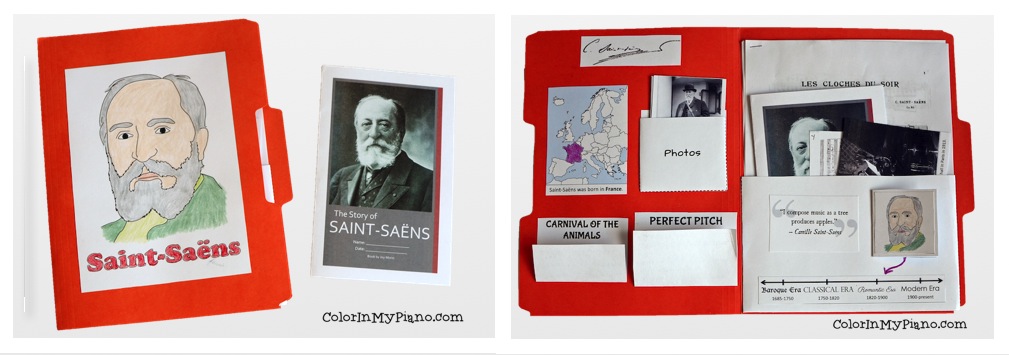
The highlight about studying Saint-Saens was listening to all the movements from Carnival of the Animals! My students loved learning about the musical jokes that are embedded in that work.
Schumann, Robert
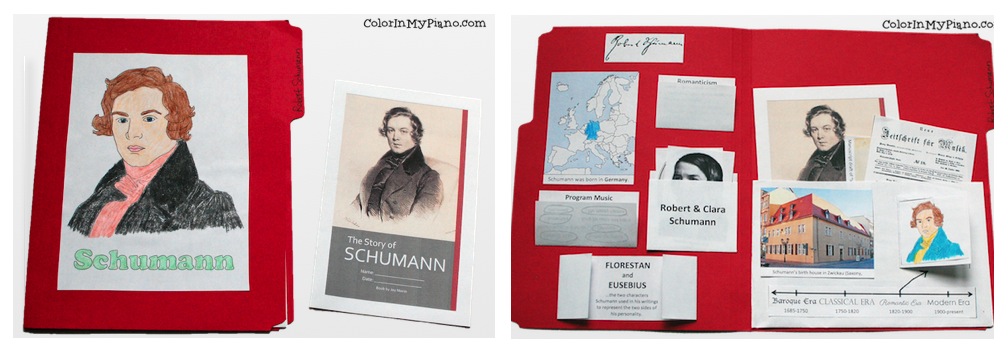
In this composer study, students will learn about Robert Schumann, as well as a little about his wife, Clara. Among the terms covered are Romanticism, program music, and character pieces.
Tchaikovsky, Peter
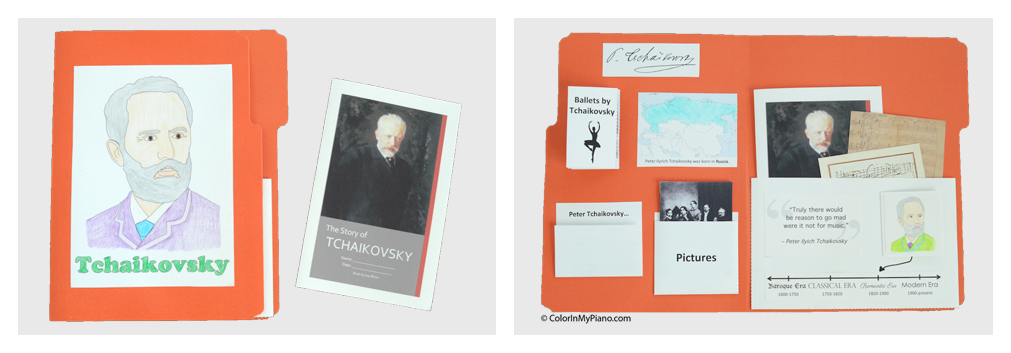
Students will learn about Tchaikovsky’s life and music as a late-Romantic composer. Students will enjoy learning about his career change to music, his three ballets, and his other most famous compositions.
MODERN ERA
Cage, John
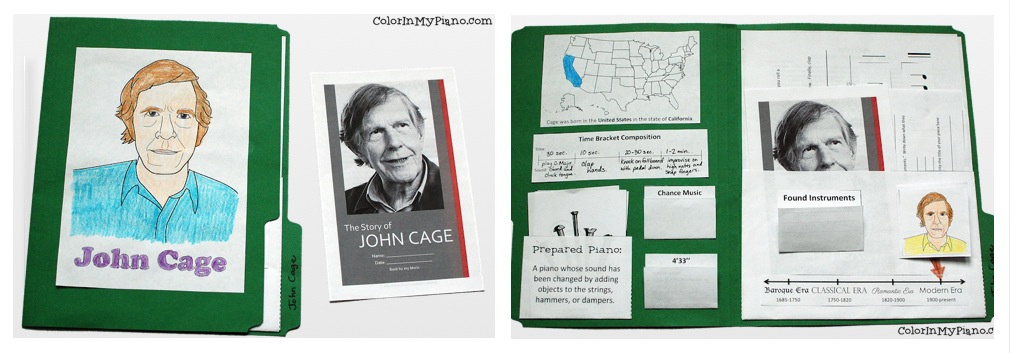
I mentioned the John Cage lapbook when I blogged about my October Piano Party. This composer study is lots of fun to teach! As an extension, my students and I explored the room to find “found instruments” and experimented with prepared piano. (No, I didn’t bring screws or bolts anywhere near my piano…but we did try laying pieces of felt and tinfoil on the strings/dampers to see what sounds we could create!)
Debussy, Claude
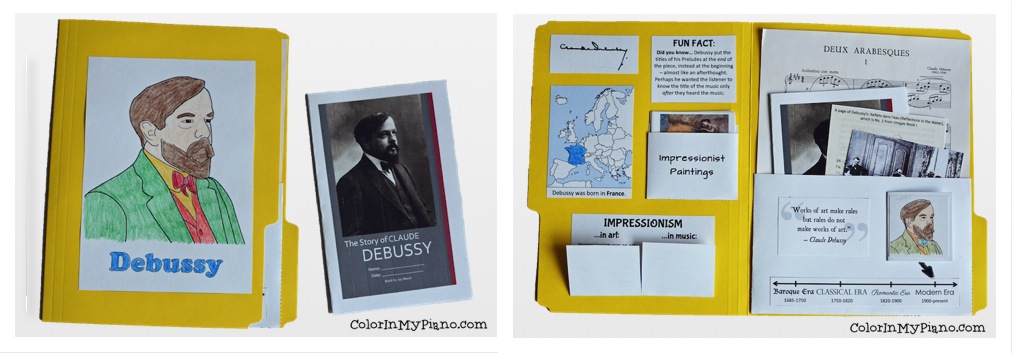
I think my students’ favorite part about studying Debussy was seeing some examples of Impressionist artwork and learning how it relates to Debussy’s music. We also learned about the whole-tone scale.
Joplin, Scott
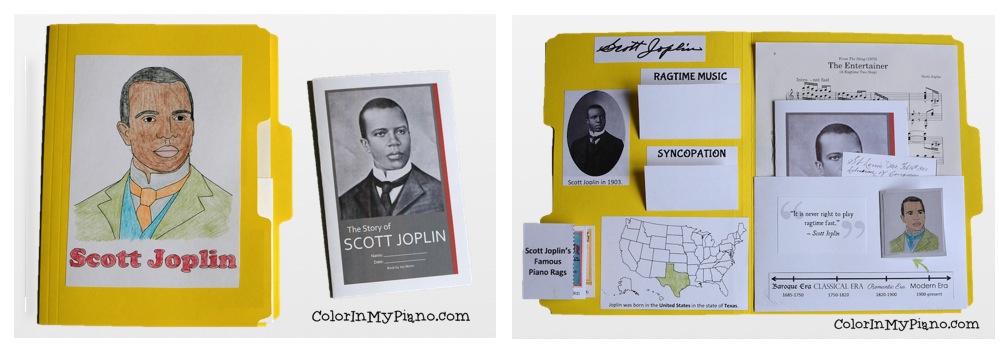
Our study of Scott Joplin brought about a discussing of ragtime music and syncopation. We also listened to some of Joplin’s most well-known piano rags and analyzed their forms.
Prokofiev, Sergei
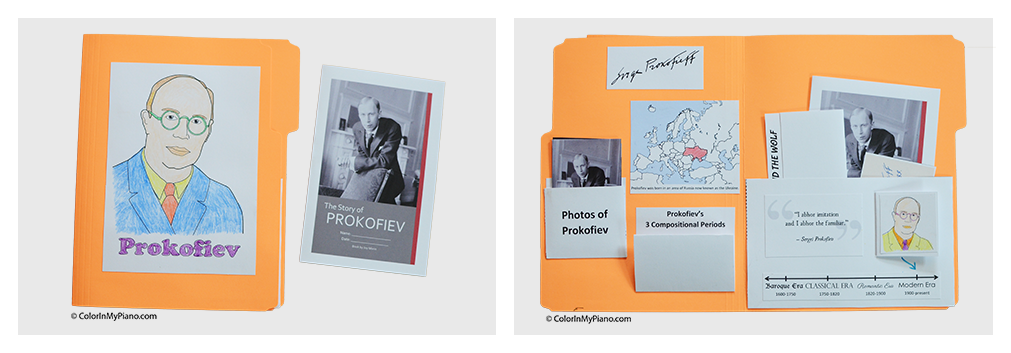
Sergei Prokofiev was a great Russian composer of the Modern Era. Students will learn about how the political upheaval in Russia impacted Prokofiev both personally and as a composer. Special attention will be given to perhaps his most well-known work, Peter and the Wolf.
Rachmaninoff, Sergei
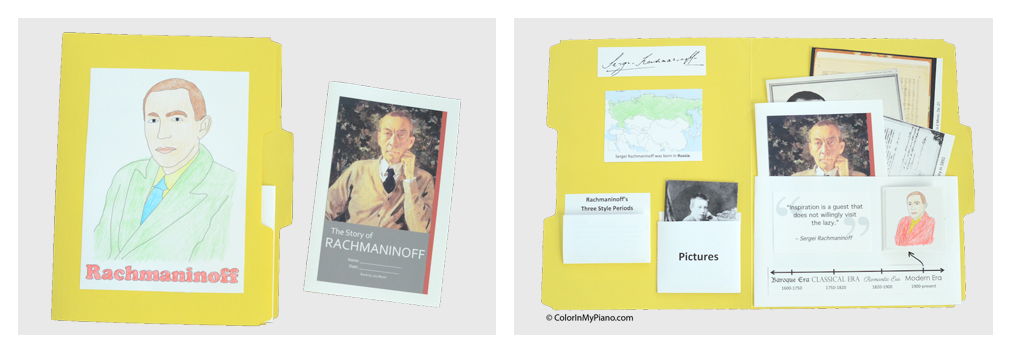
Russian composer Sergei Rachmaninoff was a 20th-century pianist, conductor, and composer, composing in the late-Romantic tradition. Students will enjoy learning about Rachmaninoff’s concert tours, recording contracts, incredible musical memory, and most well-loved compositions.
Stravinsky, Igor
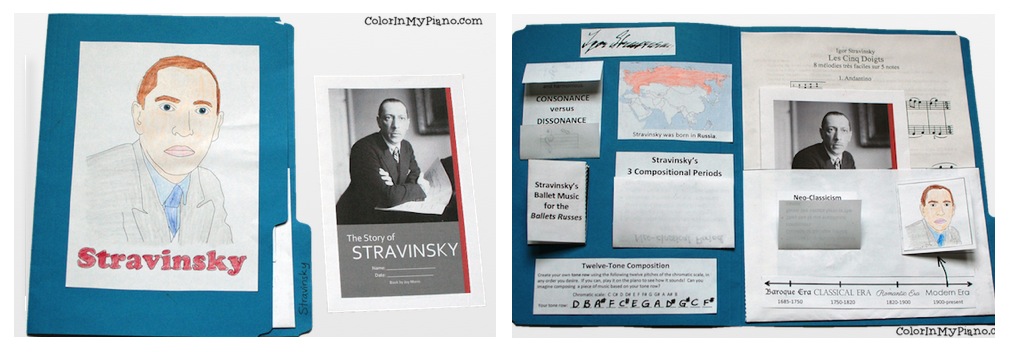
Studying Stravinsky is the perfect time to discuss the terms “consonance” versus “dissonance.” In this study, students will learn about 12-tone music, neo-classicism, and Stravinsky’s three compositional periods.
Have you already tried out one of these composer studies? If so, please leave your review comments below! You feedback may be useful to other teachers.
*Click here to return to the Great Composers & Their Music curriculum description in the Shop.*
I’ve started using these with my piano kids, learning about a new composer each month, and they love them! So far we’ve learned about Mozart, and Bach. A couple have been asking over and over when the next composer is.
That’s great, Rachel! Thanks for leaving your comment – I’m so glad to hear the lapbooks are a success with your students so far!
I live in South Korea, is a piano teacher.
Saw your blog
Thank you so much useful information.
I’ll visit more often.
Hi Joy! Just wanted to thank you for your terrific materials. I teach piano lessons part time in my Massachusetts home studio. I purchased your Beethoven lapbook and used it this past week with 15 students, ages 7 to 12, in one-hour group lessons (4-6 students per lesson). I love the engaging format (fold-outs and pockets)- very fun for kids to construct and they were excited to share with their families. The concrete “artifacts” (Heiligenstadt testimony, autograph manuscripts) bring the history to life for kids, the concepts become much more memorable, and they look great as color copies! For my groups, the hour felt rushed and in the future I will plan for 90 minutes. I also prepped quite a bit of the project in advance for students (cutting and organizing). I’m planning three optional history group lessons this summer and now the question is which lapbooks to do next! I’m thinking J.S. Bach, Schumann, and then a modern composer… maybe Joplin, Holst or Stravinsky. I’ll be ordering soon! Just wanted to let you know how much I appreciate your materials. They are a wonderful resource!
Thank you for the feedback, Julie! I’m so glad to hear about your success with the Beethoven lapbook! 🙂
Hi Joy! My students and I fell in love with your composers scrap books. my students can’t wait till next group class to learn about a new composer.
What a great idea! Please, thank your sister for wonderful pictures.
Can we ask you to make books about Clementi and may be even Khulau? )):
Thanks, Joy
Thanks for the requests for Clementi and Kuhlau, Larissa! I will see what I can do in the upcoming months! 🙂 I’m so glad your students enjoyed making their own lapbooks.
Thank you, Joy.
Use the composer database in classicsforkids.com to supplement these lessons. It is the kids site for the Cincinnati Orchestra, and is has wonderful free resources!
My piano kids still love these! I’ve had a few of them asking if there will be a folder for Tchaikovsky. Apparently they really want to learn about the composer who wrote The Nutcracker.
How long would you estimate it takes to complete a lap book? I have a 2 hour block of time with kids age 7-9. Thank you for all that you do, your resources are amazing!
It generally takes 45 to 60 minutes to complete a lapbook. You could stretch the lesson further if you listen to lots of musical excerpts or add your own extensions/activities to the lesson plan. Hope that helps, Laura!
Hi Joy,
I was wondering if your composer lap books would work well with teenagers 13 – 17?
They can be a hard group to pleases!
Thanks,
Denise Thompson
Hi Denise,
The oldest student I have had complete a lapbook was 15 years old, and he thought it was great. I did my best to write the biography booklet in such a way that would appeal to older students, while still being clear enough for younger students to understand as well. If you would like to view an example biography booklet, visit and then scroll down to where you see the Mozart biography booklet download link. Purchasing the complete Mozart lapbook means receiving a PDF that contains this booklet as well as the lapbook pages. There are enough advanced concepts in the biography booklet and lesson plan page that will be intellectually stimulating for teenagers, especially if paired with listening excerpts from YouTube. Please if you have more questions!
Joy, thank you so much for sharing your wonderful resources! I am so thrilled you updated the lesson attendance for 2014-2015! I have taught piano for many years and this has saved me SO much time!
I would be interested in purchasing all of your composers. What would the price be if I bought them all?
Thank you! Lynn Dulak, red wing, minnesota
I’m getting ready to do the Bach lap book with my 1st graders. I’m really enjoying assembling my own! Can anyone tell me where the little booklet that says, “how many children did Bach have” goes? I don’t see it in the pictured example and the only instructions for it say to cut it out and write the number inside. Thank you. This is a great resource and I highly recommend it. Can’t wait to try a few other composers.
Hi Lisa! You can feel free to put that small booklet anywhere you please. Some of my students like to glue it to the backside of the folder, and others put it into the pocket. There’s no single correct way to do it!
Thanks so much for your recommendation! I’m so glad you enjoyed the Bach lapbook and I do hope you will try out other composers!
Any chance you are working on a lapbook for Clementi? We love doing your lapbooks. They really help “seal” the information into their memory.
Thank you for these excellent resources Joy! I ran a music history camp last month, we learned about Bach, Mozart, Saint-Saens and JOplin. The kids were so engaged, and I was really impressed by how much they retained about each through the week.
Whoah — no Franz Schubert — is he perhaps in the works? Also, though not as famous, composers like Turk and Gurlitt might be good, since students learn to many of their pieces in early repertoire series. Other suggestions would be Tchaikovsky, Kabalevsky…..
Thank you for the lapbooks- for the past 3 years I have used lapbooks as part of the study for a composer based group masterclass. I make the lapbooks with students ages 5-13, and use the booklet with 14-adult ages. We work on the lapbooks for a few minutes at each lesson prior to the masterclass and finish them at the masterclass. Each student prepares a piece by the composer as well. We have done Bach, Mozart, and Beethoven. Next year we will study a romantic composer. I would love to do Tchaikovsky, but I don’t see a lapbooks available. Is there a chance you are working on one? Your lapbooks are a wonderful addition to music study for my students of piano, violin and cello!
Thank you Joy! I am excited to use them!
I hope you get some new composer names on the list this year!
Yes Joleen, I will be posting a couple new composers this year! Check back later this summer!
Hi Joy,
My 7th graders had so much fun putting together the Bach lapbook! I kept it a secret and had them in suspense for 2 weeks before. Told them we would be doing a special project and to bring supplies. Now the 9th and 10th graders want to make one too! Thanks so much for this fun informative project.
What a wonderful idea to make it a surprise! And how nice to hear what a hit it was with your Junior High students. It hadn’t occurred to me to have students bring their own supplies — great idea.
Joy – From your Lap Book list it looks like I was wrong to think you offered John Williams. Am I missing it somehow?
So far, I’ve used Mozart and JS Bach with my students. They seem to enjoy them. Thanks for your work!
Lori, I have not yet created one for John Williams, I’m sorry to say. I hope you’ll find another option that suits your purposes. I’m happy to hear your students have enjoyed the composer lapbooks!
I have been using Joy’s materials for about 5 years now and l must say my students greatly enjoy the group classes, always asking who are we going to study next. There is something in this hands-on process on assembling the lapbook that keeps the kids interested in the material and music itself of course! Thank you, Joy!
May I suggest the following composers: F. Schubert, M. Glinka, N. Rimsky- Korsakov and G. Faure?
I love these so much! Are you by any chance creating any more women composers? One of my students would love to learn about them! Thanks again! So appreciate your resources???
Agreed! I would love to see more diverse composers as well! Also, would be fun to have some modern composers, such as John Williams or Lin Manuel Miranda.